Food as Medicine
Mood, Microbiome & 85% Dark Chocolate: A Delicious Gut–Brain Love
August 7, 2025 · 5 min read
(Estimated reading time: 5 minutes)
Why This Matters for Mid‑Life Women
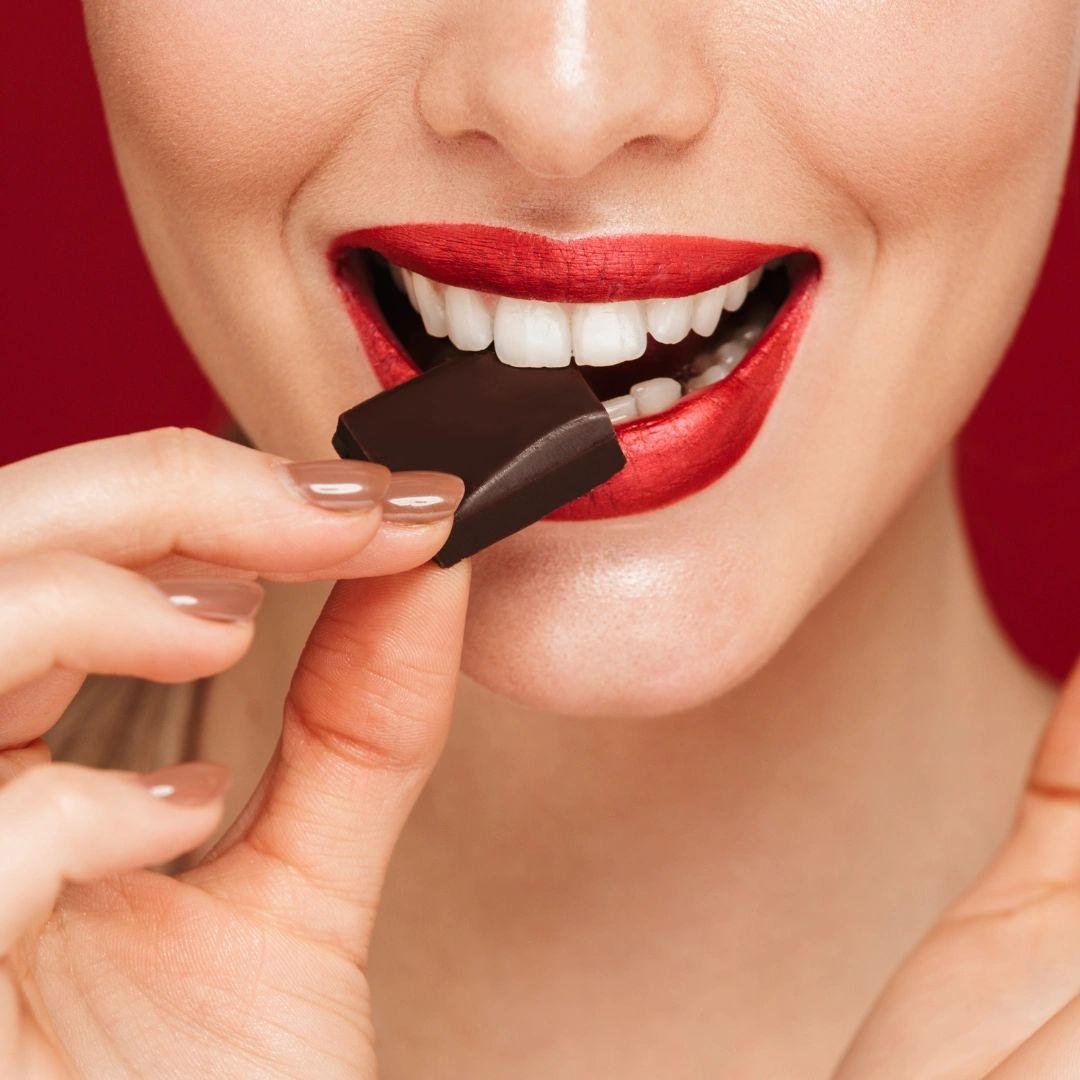
When shifting hormones meet modern‑day stress, our emotional equilibrium can feel a little wobbly. The good news? A square (or three) of 85 % dark chocolate isn't just a mindful treat—it's a science‑backed way to nurture the gut–brain axis and lift mood.
The Gut–Brain Connection, in Plain English
Think of your gut and brain as long‑distance besties chatting through hormones, immune signals, and a super‑highway of nerves (the vagus nerve). A balanced gut microbiome → calmer immune system → steadier stress hormones → brighter mood.
Meet the Star Ingredient: 85 % Cacao
- Polyphenol powerhouse. The darker the chocolate, the more flavanols—and those act like fertilizer for beneficial gut microbes.
- Minimal sugar. Less blood‑sugar roller‑coaster, more stable energy.
- Magnesium & iron. Two nutrients mid‑life women are often low in.
Why 70% Might Not Cut It
If 85 % tastes too bold right now, try “laddering up”: combine one square of 85 % with a square of 70 %, gradually shifting the ratio until your palate adjusts.
- Lower polyphenol density. A 70 % bar can contain up to 40 % sugar and added cocoa butter, crowding out flavanol‑rich cocoa mass—the very compound that feeds gut bacteria.
- More sugar, less fiber. Higher sugar means a quicker blood‑glucose spike and can encourage less‑helpful gut microbes.
- Diluted magnesium & iron. With less cocoa mass, you lose much of the mineral boost mid‑life women often need.
- Different sensory cue. Bitterness in 85 % chocolate slows eating pace and encourages mindful savoring—part of the relaxation response.
What the Research Says
- Shin et al., 2022 (pubmed.ncbi.nlm.nih.gov) — 30 g/day of 85 % dark chocolate for 3 weeks (20‑30 y adults) — ↓ Negative affect; ↑ overall microbial diversity; ↑ Blautia obeum correlated with better mood
- Abdoli et al., 2024 (nature.com) — 12 g/day of 78 % dark chocolate for 8 weeks (menopausal women) — ↓ Depression scores vs. milk‑chocolate control
- Verywell Health, 2025 (verywellhealth.com) — Review of recent trials — Best timing: afternoon to beat the 3 p.m. slump; mood benefit linked to gut‑microbiota shifts
How it likely works:
- Pre‑biotic effect – Cocoa flavanols feed friendly bacteria like Bifidobacterium and Lactobacillus.
- Short‑chain fatty acids (SCFAs) – Healthier microbes produce butyrate, soothing gut lining & lowering inflammation.
- Serotonin & GABA pathways – SCFAs and polyphenols influence neurotransmitter production, helping you feel calm and uplifted.
How to Choose & Enjoy Your Daily Square
- Aim for ≥ 85 % cacao—look for bars with cocoa mass listed first and ≤5 g sugar per serving.
- Stick to 1 oz (about 30 g)—roughly three large squares.
- Pair with fiber‑rich foods—berries or a handful of walnuts amplify the pre‑biotic effect.
- Mindful timing—an afternoon ritual can smooth stress‑hormone spikes.
Quick Recipe: 5‑Minute Mood‑Lifting Bark
Ingredients
Spread melted chocolate on parchment, sprinkle toppings, refrigerate 10 min, break into shards. Done!
- 3 oz 85 % dark chocolate, melted
- 2 Tbsp chopped pistachios
- 1 Tbsp freeze‑dried raspberries
- Pinch flaky sea salt
Key Takeaways
Chocolate is food, not Rx. For persistent low mood, always seek personalized medical advice.
- A daily square of 85 % dark chocolate can meaningfully support mood by nurturing gut health.
- Polyphenols act as pre‑biotics, shifting microbial diversity in as little as three weeks.
- Pair chocolate with whole‑food fiber, practice mindful eating, and savor the ritual—your gut and brain will thank you.
References
- Shin J‑H, et al. J. Nutr. Biochem. 2022;99:108854. pubmed.ncbi.nlm.nih.gov
- Abdoli E, et al. Sci. Rep. 2024;14:23971. nature.com
- Verywell Health. “Best Time to Eat Dark Chocolate for Mood.” 2025. verywellhealth.com
Written by
Founder, Haus of V
Certified health coach working with women through midlife, hormone health, and longevity. This is educational content, not medical advice.
Keep reading
Get the letter
Twice-monthly essays on hormones, longevity, and food as medicine.