Hormone Health · Nutrition · Perimenopause · Menopause
What Is Seed Cycling? Small Seeds With Benefits Through Every Stage
What is seed cycling, and how can it support women through their reproductive years, perimenopause, and menopause?
September 10, 2026
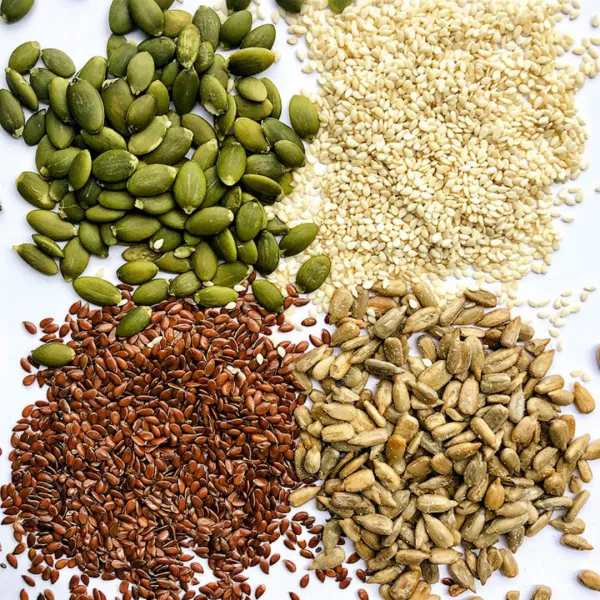
Seed cycling is a simple food-based practice that involves rotating flax, pumpkin, sesame, and sunflower seeds throughout the menstrual cycle. These seeds supply fiber, healthy fats, plant protein, and important micronutrients—a nourishing combination for women at many stages of life.
The practice pairs different seeds with the two main phases of the menstrual cycle. For women whose periods are changing or have stopped, these same foods remain valuable additions to everyday meals.
One appealing part of seed cycling is its simplicity: a small addition to breakfast, a sprinkle over lunch, or a spoonful blended into a dressing.
How Does Seed Cycling Work?
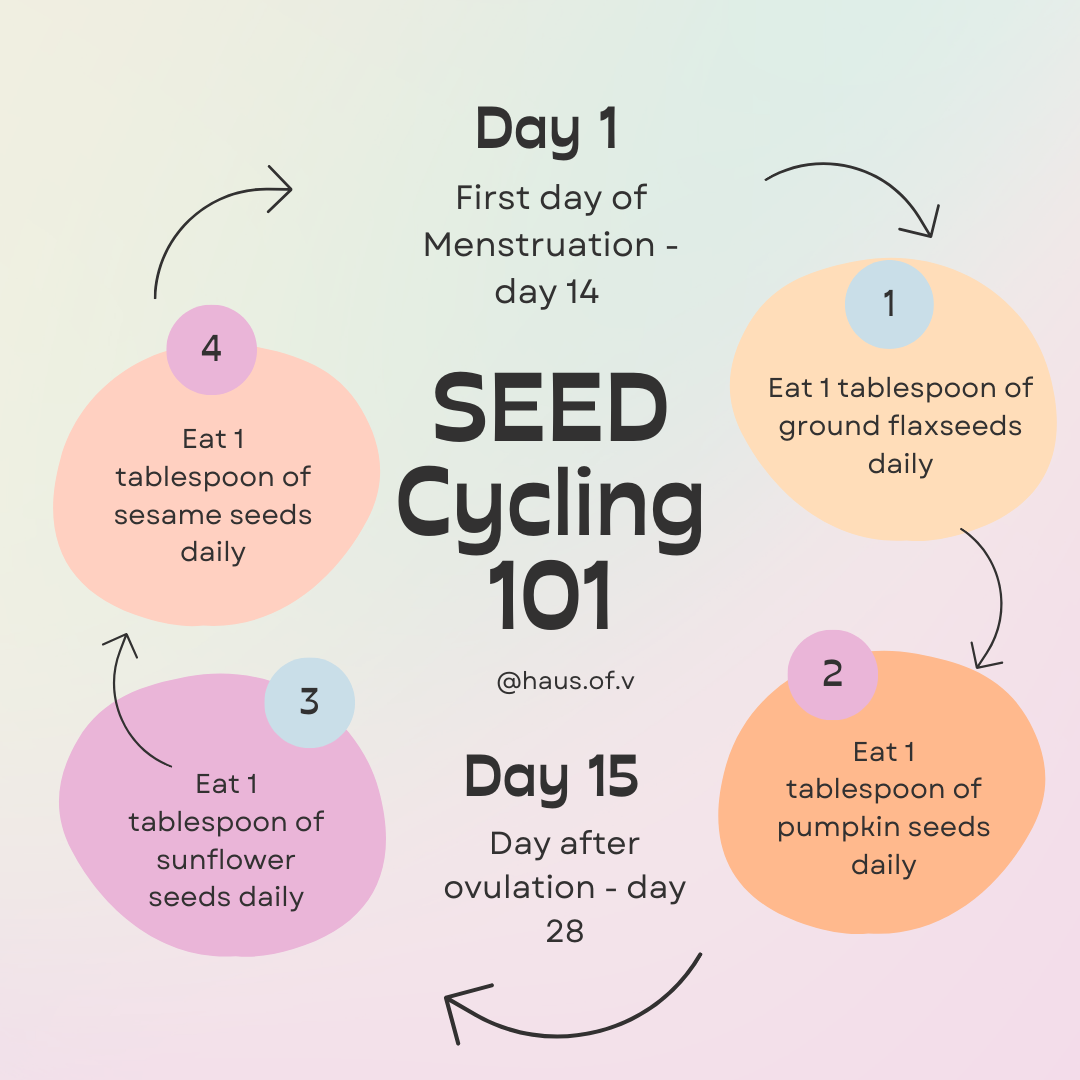
The traditional routine follows this pattern:
| Phase | Seeds | Common daily serving |
|---|---|---|
| Follicular phase: first day of your period until ovulation | Ground flaxseed and pumpkin seeds | One tablespoon of each |
| Luteal phase: after ovulation until your next period | Sesame and sunflower seeds | One tablespoon of each |
You will often see this simplified to days 1–14 and days 15–28. Your own cycle may follow a different rhythm, so those dates are a template rather than a requirement. The servings are customary food portions, not a medically established treatment dose.
What Makes These Seeds So Nourishing?
Flaxseed: Fiber, Essential Fats, and Lignans
Flaxseed provides fiber and alpha-linolenic acid, or ALA, an essential plant omega-3 fat.
It is also rich in lignans—plant compounds that gut bacteria convert into substances with weak estrogen-related activity. This is one reason researchers have studied flaxseed in relation to menstrual and menopausal health. Its effects are more complex than simply increasing or decreasing estrogen.
Try it: Stir ground flaxseed into oatmeal, yogurt, or a smoothie. Grinding helps your body access the nutrients inside the seed.
Pumpkin Seeds: Magnesium, Zinc, and Protein
Pumpkin seeds contribute plant protein, magnesium, and zinc. Magnesium supports normal muscle and nerve function, energy production, and bone health. Zinc supports normal immune function.
These nutrients make pumpkin seeds useful well beyond a particular phase of your cycle.
Try them: Add shelled pumpkin seeds to salads, soups, or roasted vegetables for a satisfying crunch.
Sesame Seeds: Healthy Fats, Fiber, and Lignans
Sesame seeds contribute unsaturated fats, fiber, minerals, and lignans. They bring nutritional variety to meals and have also been investigated in research involving menstrual health.
Try them: Sprinkle sesame seeds over a grain bowl or use tahini—ground sesame paste—in a lemon dressing.
Sunflower Seeds: Vitamin E and Cell Support
Sunflower seeds are a good source of vitamin E, an antioxidant that helps protect cells from oxidative damage and supports immune function. They also provide unsaturated fats and other nutrients.
Try them: Sprinkle shelled sunflower seeds over breakfast bowls or combine them with fruit for a snack.
What Does the Research Say?
There are encouraging findings worth understanding.
A 2025 systematic review covering 10 studies and 635 participants reported improvements in menstrual regularity, PMS symptoms, and some hormonal and metabolic measures among women with PMS or PCOS who consumed seed-cycling combinations or individual seeds.
An earlier small randomized crossover study involving 18 women found that flaxseed consumption was associated with a longer luteal phase. Researchers also observed three cycles without ovulation during the control periods and none during the flaxseed periods.
These findings provide reasons for continued research. The important distinction is that studies of individual seeds do not establish that rotating all four seeds produces the same effects. Larger, stronger trials are needed to determine how reliably the complete practice improves cycle regularity or symptoms.
The nutritional benefits are established; the specific hormonal benefits of the rotation are promising but less certain.
Seed Cycling During Perimenopause
Perimenopause is a time to pay closer attention to nourishment as your cycle and symptoms change.
Periods may become less predictable, making a strict monthly schedule difficult to follow. You can adapt the practice to your circumstances or simply include these seeds regularly in your meals.
Flaxseed has shown particular promise. In a 2024 randomized, placebo-controlled study, women taking 10 grams of flaxseed powder daily for three months reported greater improvements in perimenopausal symptom scores than women receiving the control food. The study evaluated flaxseed rather than the full four-seed rotation.
Alongside that emerging research, these seeds offer everyday nutritional value: fiber, essential fats, plant protein, and minerals that contribute to caring for your body during this transition.
How These Seeds Can Benefit Women After Menopause
The benefits of nourishing foods continue after your periods stop.
After menopause, there is no menstrual cycle to match, so you can enjoy all four seeds throughout the week without following a rotation.
They contribute to a varied diet through:
- Fiber, which supports digestive regularity.
- Unsaturated fats, including the essential omega-3 fat ALA in flaxseed.
- Plant protein, contributing to your overall daily intake.
- Magnesium, supporting normal muscle, nerve, and bone function.
- Vitamin E, helping protect cells and supporting immune function.
Research on flaxseed for hot flashes has been mixed, so symptom relief is not guaranteed. Its nutritional value remains useful whether or not you notice a change in symptoms.
My Experience With Seed Cycling
I started seed cycling about two years ago, after noticing that my cycle was becoming irregular around age 44.
For me, it worked very well. My cycle became more regular again, and I felt it was a helpful addition to my routine.
That positive experience is why I wanted to share this practice. It is my own experience rather than a promise of the same result for everyone, but it has been a meaningful part of how I care for myself.
Simple Ways to Get Started
Make it easy enough to fit into the meals you already enjoy.
- Keep the seeds accessible. Store them according to package directions, with ground seeds refrigerated when recommended.
- Use ground flaxseed. Whole flaxseed can pass through the digestive tract without being fully broken down.
- Build up gradually. If you are adding more fiber than you usually eat, start with smaller portions and drink enough water.
- Choose variety. Smoothies, oatmeal, salads, soups, and dressings all offer opportunities to include seeds.
- Notice your experience. Tracking your cycle and symptoms can help you identify patterns and have more useful conversations with your healthcare provider.
Avoid seeds you are allergic to. For concentrated supplements or questions about medication timing, check with your clinician or pharmacist. New heavy bleeding, bleeding between periods, or any bleeding after menopause should be assessed medically.
A Nourishing Practice That Can Grow With You
Seed cycling offers a practical way to bring more nutrient-rich foods into your routine and become more attentive to your body.
Whether you follow the traditional rotation or enjoy these seeds throughout the week, they can have a place at your table during your reproductive years, perimenopause, and menopause.
At Haus of V Life, I believe in combining education, personal awareness, and everyday nourishment to help women feel more supported through change.
Want help building nutrition and lifestyle habits that fit your stage of life? Send me a message at 202.997.7747 to learn about coaching with Haus of V Life.
With love and fire,
Violetta
Founder, Haus of V Life
For general education. Personal experiences and results vary; this article does not replace individualized medical care.
Sources & Further Reading
- Nagarajan et al., 2025: Seed Cycling for PMS and PCOS—A Systematic Review — Reviews research on seed cycling and individual seeds, including reported benefits and study limitations.
- Phipps et al., 1993: Effect of Flax Seed Ingestion on the Menstrual Cycle — A small randomized crossover study examining flaxseed and menstrual-cycle measures.
- Shrivastava et al., 2024: Effects of Flaxseed on Perimenopausal Symptoms — A randomized, placebo-controlled study of daily flaxseed powder.
- NIH Office of Dietary Supplements: Magnesium
- NIH Office of Dietary Supplements: Vitamin E
- NIH Office of Dietary Supplements: Omega-3 Fatty Acids
- Cleveland Clinic: The 6 Best Seeds to Eat
- NCCIH: Menopausal Symptoms and Complementary Health Approaches
- ACOG: Perimenopausal Bleeding and Bleeding After Menopause
Written by
Founder, Haus of V
Certified health coach working with women through midlife, hormone health, and longevity. This is educational content, not medical advice.
Keep reading
Get the letter
Twice-monthly essays on hormones, longevity, and food as medicine.